
I'm putting the finishing touches on the video now, including a bunch of different tones, and I'm seriously stoked with how this little quarter-watt monster sounds. It's taking a little longer than planned, but it's coming this week!
Here's a useful bonus if you're planning to build one: all the mods for the original Dumbleton will work with the VH-ONE too!
So if you've already picked up the Dumbleton schematic through a previous purchase, you've already got those mods ready to go.
If you haven't got it yet, you can find the schematic and mods here:
https://mcphersonmusic.nz/products/the-dumbletontm-1-4-watt-amp-schematic
And of course, I'll be doing a deeper members-only dive into the VH-ONE circuit to go along with the main video.
Nearly there! Can't wait to share this one with you all. 🤘
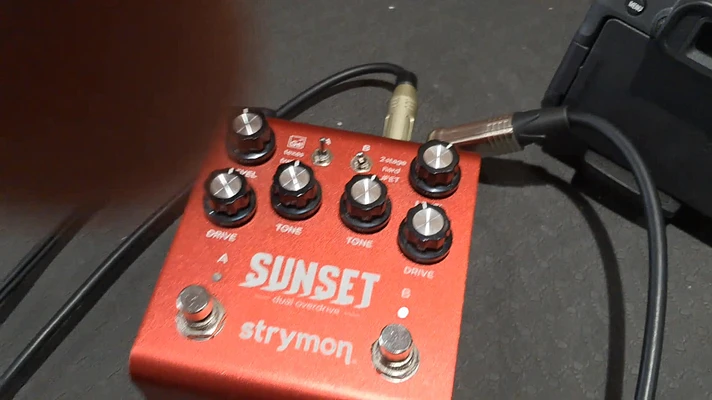

Here's a little preview of what's coming to YouTube in a couple of weeks.
After the ridiculous success of the Dumbleton, I wanted to take the same sort of unconventional approach in a completely different direction.
This one is designed from scratch, built on a block of wood, and uses two chips to chase that classic high-gain rock sound.
It's only a quarter-watt, but it drives a real 8Ω or 16Ω guitar cabinet, and the sound is genuinely ridiculous.
The full video is coming soon, along with a Workbench Tier members-only deep dive into the circuit, the design decisions and how the whole thing works.
More soon. 🤘
Original Dumbleton video:
https://youtu.be/apl7gM9BWKg
More videos and membership:
https://mcphersonmusic.nz

I've been wanting to find a simple way of explaining what actually happens to a guitar signal as it moves through pedals and, especially, through the different stages of an amplifier.
Check out the video here:
So I built an app to visualise it, and then made a video around it.
It's deliberately simple, but I think it could be really useful if you've ever wondered why your gear behaves the way it does.
And you can play with the free app here: